


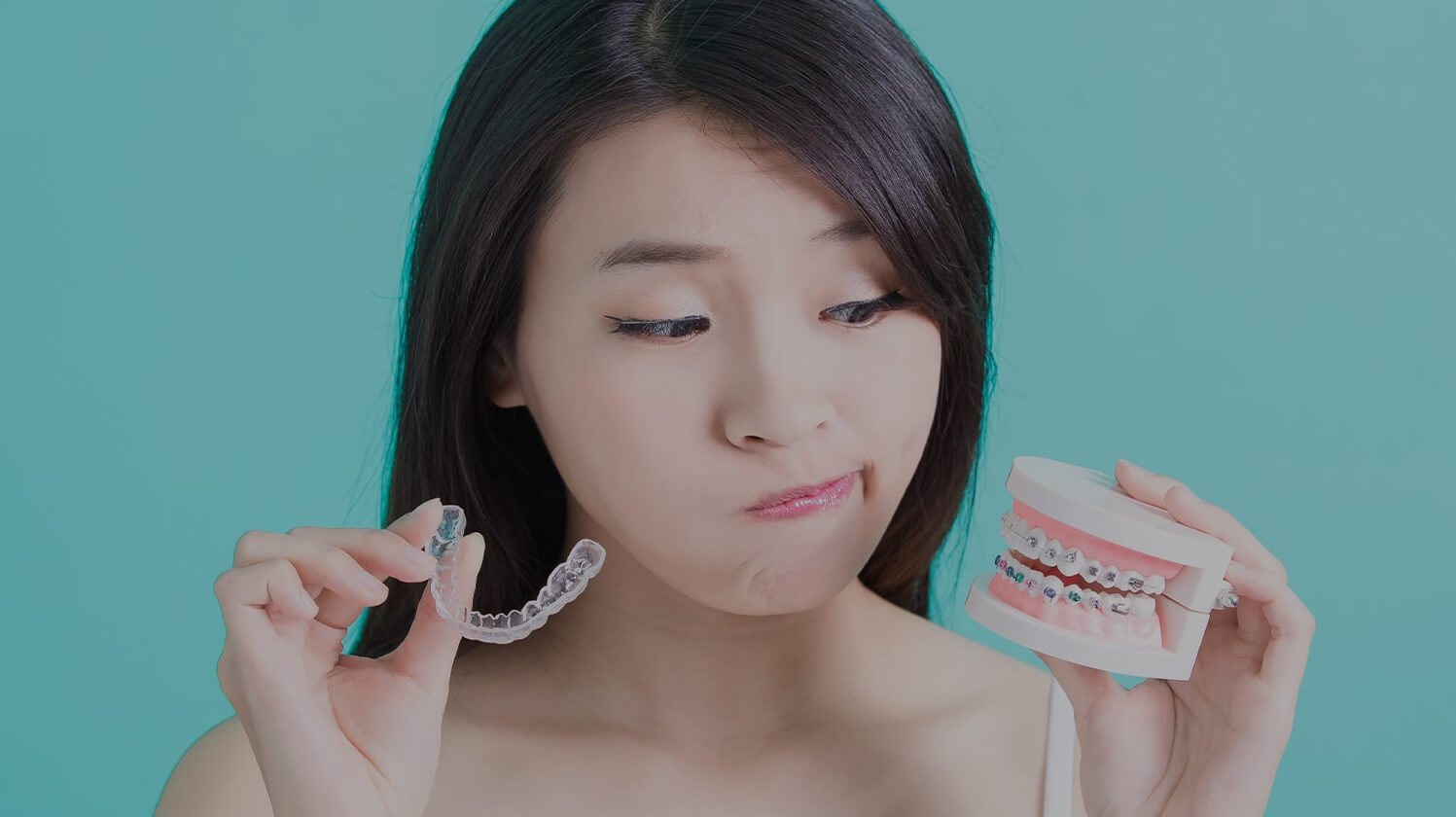
Braces vs. Invisalign®: Which Is Right for You?
Understanding Traditional Braces
Where Braces Shine
Braces are especially effective for more complex tooth movements and are often the best choice for correcting deep bites. Because they’re fixed in place, they’re always working—no reminders needed. Keeping regularly-scheduled appointments is absolutely necessary to ensure effective treatment and healthy teeth.
- Braces are permanent during treatment and visible on the teeth
- Appointments typically occur every 6–10 weeks and last about 30–40 minutes
- After adjustments, you may experience soreness for 2–3 days
- Certain foods—especially hard, sticky, or chewy items—need to be avoided
- Cleaning requires extra time and attention to prevent plaque buildup
- Occasional unexpected visits may be needed for broken brackets or poking wires
Understanding Invisalign® Clear Aligners
Invisalign® offers a clear, flexible alternative using a series of custom-made, removable aligners that gradually shift your teeth into place, following Dr. White’s advanced prescription.
What to Expect with Invisalign®- Aligners are nearly invisible and removable
- Appointments are less frequent—typically every 12–20 weeks, lasting 20–30 minutes
- Most patients experience minimal discomfort, usually mild pressure when starting a new set
- No food restrictions—just remove aligners before eating
- You can brush and floss as usual, without navigating around brackets and wires
- Often more compatible with crowns, bridges, and other dental work
- Ideal for open bites
Invisalign® is ideal for those seeking a more discreet option and works particularly well for open bite correction and many other alignment concerns, both minimal and complex.
Lifestyle Matters: Choosing What Fits You Best
The right choice often comes down to how treatment fits into your daily rhythm.
Busy Schedules
If your calendar is packed with work, school, or activities, Invisalign® may be appealing due to fewer and shorter appointments. Remote monitoring options can make it even more convenient.
Braces, while slightly more time-intensive, offer a set-it-and-forget-it structure—you don’t have to think about wearing them consistently.
Food Freedom vs. Structure
If you love crunchy snacks, chewy treats, or don’t want to think twice about your meals, Invisalign® gives you complete freedom with food.
Braces require more mindfulness. Certain foods can damage brackets or wires, which may lead to additional visits and delays.
Discipline and Responsibility
Invisalign® works best for patients who can stay consistent. Aligners must be worn 20–22 hours per day to be effective.
Braces remove that variable entirely. Since they’re fixed, they continue working regardless of daily habits—making them a great option for younger patients or anyone who prefers a more hands-off approach.
Oral Hygiene Habits
If you value simplicity in your routine, Invisalign® allows you to brush and floss normally.
Braces require more detailed care. Without proper hygiene, there’s a risk of decalcification, which can leave permanent white marks on the teeth after treatment.
Comfort and Adjustments
Braces adjustments can lead to a few days of soreness, especially after tightening appointments.
Invisalign® tends to be more gradual, with milder pressure at the start of each new aligner.
So… Which One Is Right for You?
Sometimes, Dr. White prescribes one specific treatment method due to your case. But often, it comes down to personal preference and there’s not a one-size-fits-all answer—which is a good thing.- Choose braces if you want a reliable, fixed solution that’s always working and ideal for certain complex movements like deep bites.
- Choose Invisalign® if you prefer flexibility, discretion, and fewer lifestyle restrictions—especially if you’re confident in staying consistent with wear time.